Project overview
Walk With Me Is a mobile fitness RPG where real steps are used to play the game. The game is being made in Unity and is currently ramping up to soft launch 2. I am the Project Lead, Designer and Animator. The team consists of 8 core members with additional support in some specialised areas.

Walk With Me
Active and Passive Loops
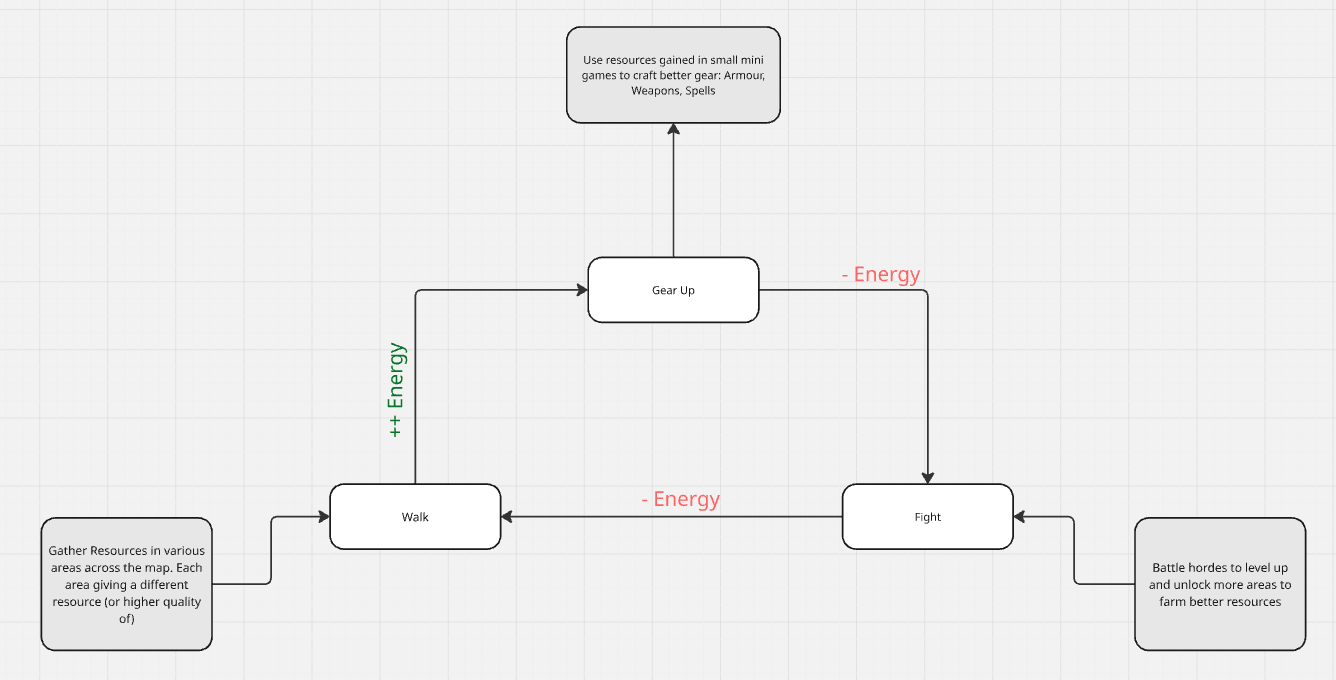
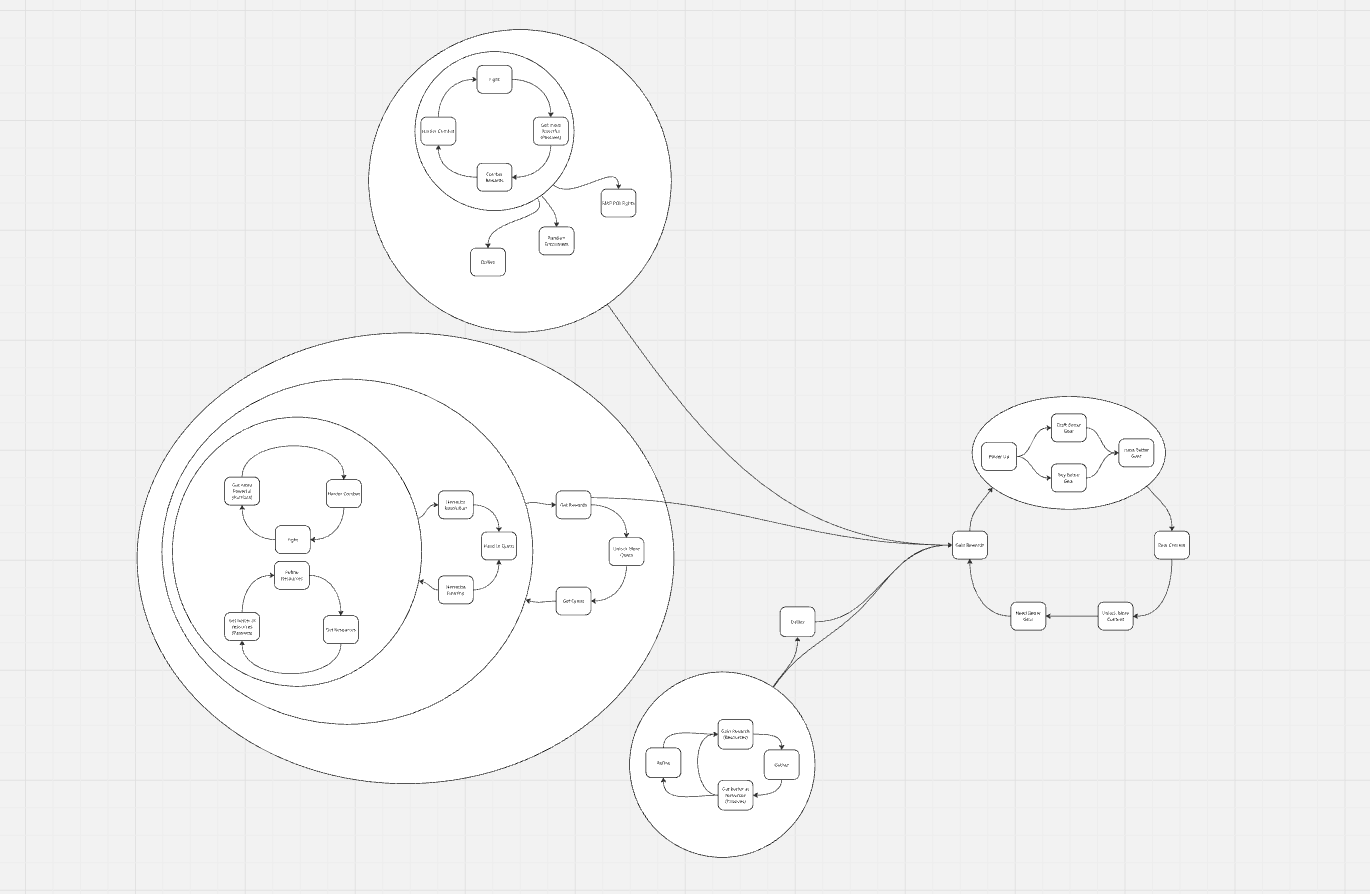
Walk With Me is unique in the sense that we have two major loops. A passive loop, where the player is walking around with their phone in their pocket, and an active loop, where the player is using resources, planning their next move or engaging in combat. One of the challenges we faced was making sure these two very distinct sections of the game fed into one another to create a larger, cohesive full game loop.
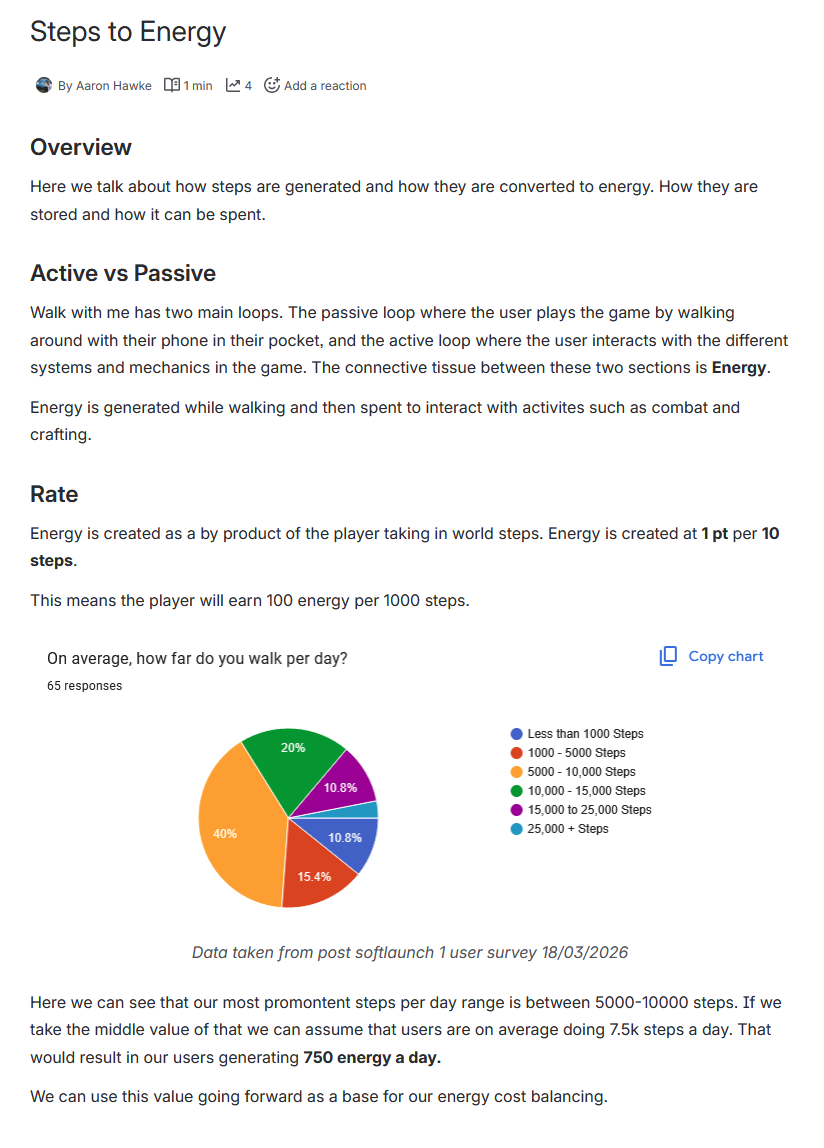
There are intrinsic connections between the two naturally, those being the need for resources, to craft better gear, to fight tougher enemies, to unlock more locations, to unlock the ability to gather better resources. But we elected to add an additional energy system to further cement the tie. As opposed to normal energy systems where they are replenished over time, ours is replenished as a byproduct of a player's walking, almost like clubcard points. This energy is then used as well as other soft currencies to perform all the active (instant) activities in the game. If a player runs out of energy they know they need to do more steps before they can continue playing. This of course will take many iterations to get the balance right but as a baseline we surveyed our users to determine the average steps taken daily, converted this to energy at a rate of 10 steps to 1 energy, and then priced (in energy) all of the activities to equate this energy to roughly 20 minutes of game time.
I like this solution for two main reasons. Firstly it builds up a habitual play loop where the player is transitioning from active to passive play frequently. Secondly it builds a strong psychological connection between a player’s physical activity and game progress. This is good because it encourages physical activity and rewards the player for their hard work.


Casual Combat
A big reason this game came about is due to myself and our Head of Production playing similar titles and finding them somewhat shallow in terms of activities available while the app is open. Discussing this we have added a number of systems for the user to engage with but the main addition would be the combat. This had to be handled carefully as we had positioned ourselves as a fitness RPG first and foremost and a combat system that had too many complexities or challenges may put off a more casual user.
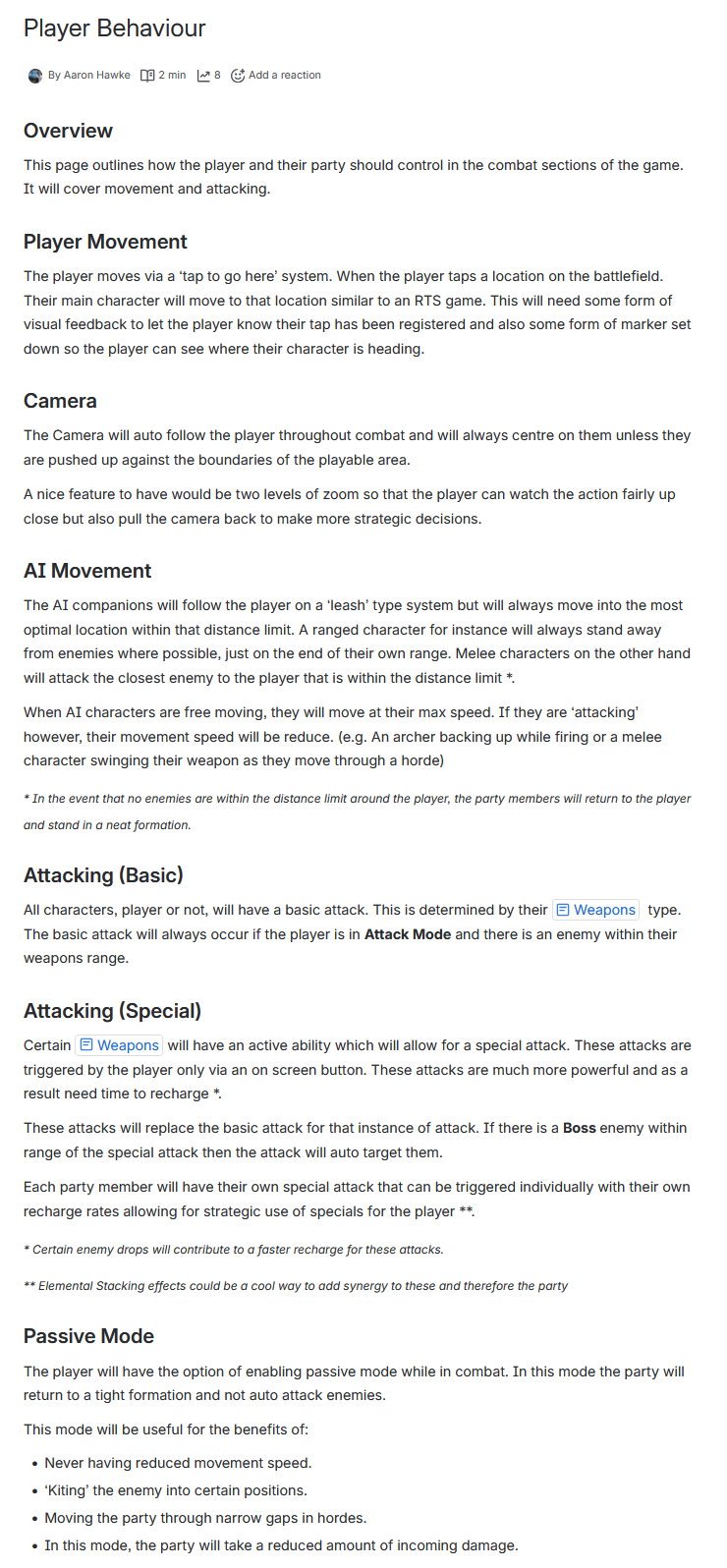
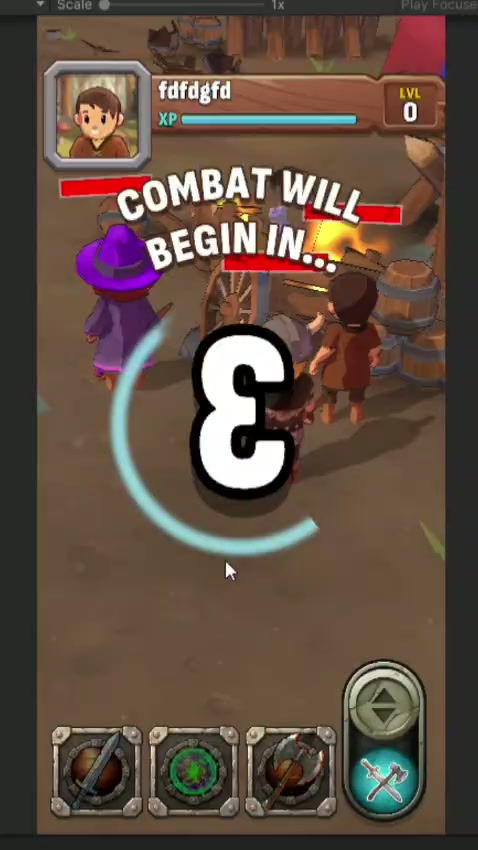
The way we addressed this was to somewhat automate the combat with a layer of player agency laid on top. What this looks like is essentially a MOBA combat system where you tap a location on screen and the whole party moves there in formation. All members of your party, including yourself, will auto attack any enemy within range and will somewhat spread out to reach slightly further away enemies.
We then added on top special attacks and an aggressive/defensive toggle. The specials work on a cooldown and each party member has one. To use one you drag from the special icon onto the map and release in the direction you wish that party member to aim. They will then perform their special at the next opportunity. The aggressive/defensive toggle changes the way the party behaves. They will stop auto attacking enemies, take less damage, and will move back into a tighter formation. This allows the user to get out of a tight spot with minimal repercussions or position themselves for optimal use of their special. Neither of these mechanics are required to engage with the combat but provide a more engaging experience to those who are seeking it.
The thing I like about this system is that it can be mostly played in one hand which I think leads to a much more palatable experience for those casual players which we can explain in three short FTUE pop ups. Part of the roadmap going forward is to add the ability to raise the difficulty of an encounter for greater rewards as well as a more intricate control scheme for those who want more agency in these sections.

Screens and UX
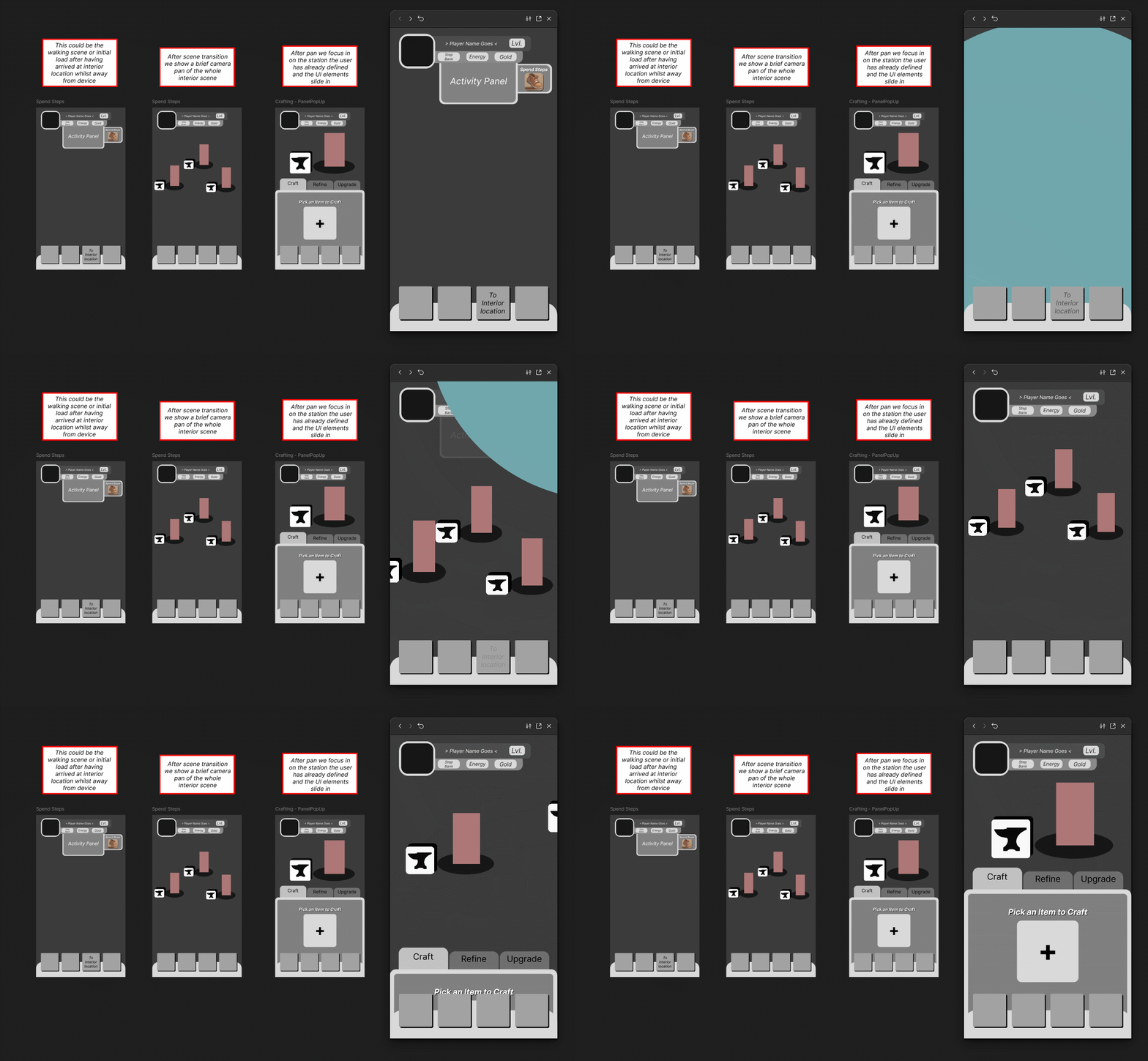
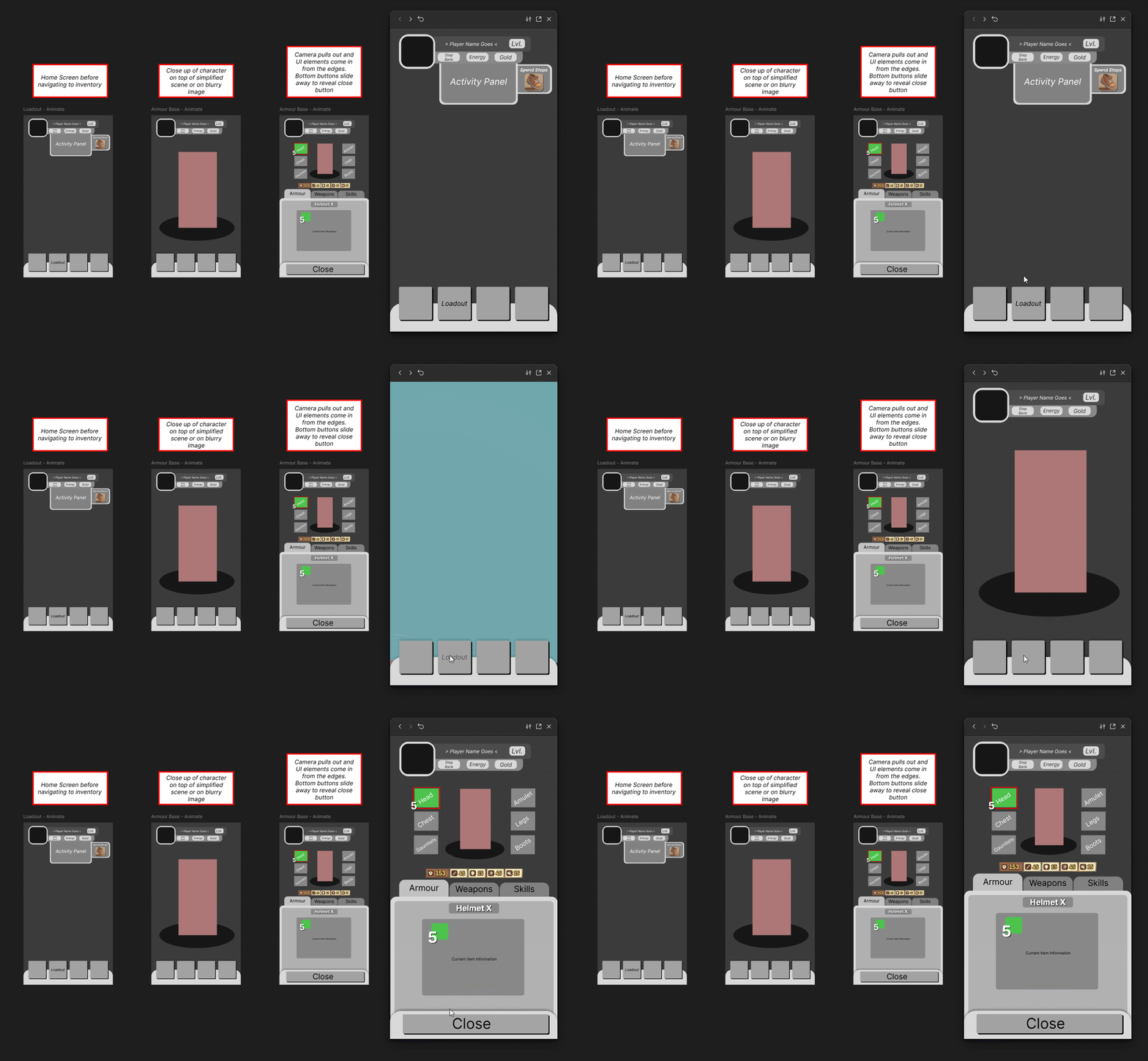
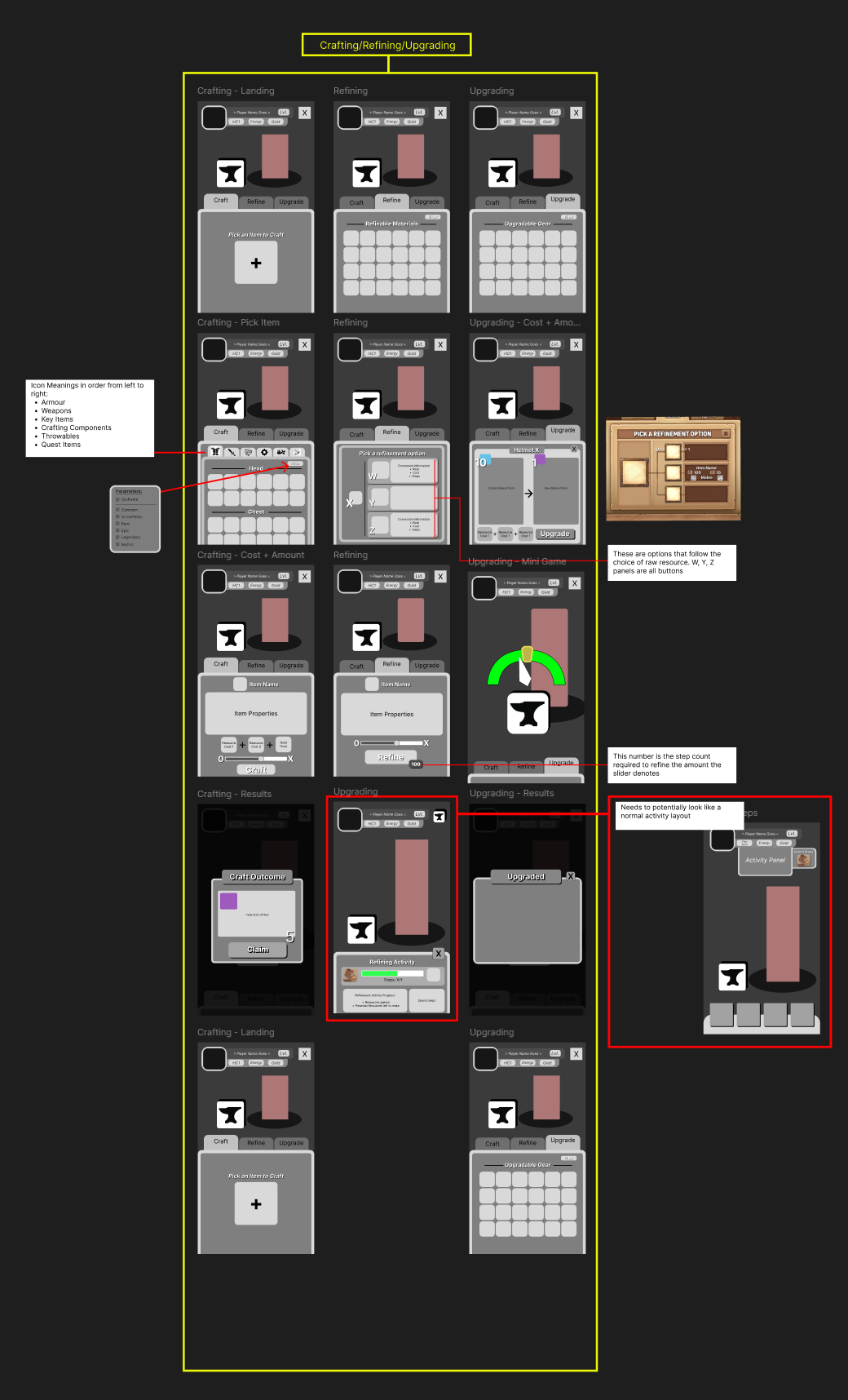
Alongside my other design responsibilities on this project a substantial amount of my time had been devoted to the UI and UX of all the screens. As the active section of the game is primarily played in the UI, this is an incredibly important task.
While I have worked on screens prior to this project, this time I have been responsible for the entirety. This means that I have mocked up designs, worked with our Art Director to develop a style guide and designed screen transitions. As well as this I have overseen implementation and helped some junior designers to learn our pipeline and ensured their output is cohesive with the rest of the game.
A struggle I have had with this has been my high standards for myself. Inevitably when designing such a large piece of work, when it comes to implementation there will be some holes or elements that don't provide the intended effect. There will always be room for a need for iteration and I have to remember this. Fortunately I work in a team of very talented people who are a delight to collaborate and iterate with.



Overall I am happy with the project in its current state and have relished the opportunity to lead and be involved in so many aspects of it with some great team members.
As previously mentioned users were surveyed at the end of their experience to gauge demographics and play styles amongst other information but of great importance was asking them what they wished to see more of next. This greatly aided us in developing a development priority order.
Walk With Me launched its softlaunch 1 in February alongside a small UA campaign using google ads. We managed to get a few thousand users and had approximately 30% complete the relatively narrow experience. We were happy with these numbers and decided to continue development laterally adding more content. One highlight personally was studying the analytical data and determining where most of the drop off had occurred and formulating plans to address this, a user step bank being of top priority to allow a player to use their unused steps to complete passive activities instantly.
Conclusions