Project overview
I created two Cultural Heritage games for the National Trust as a solo freelance developer. They requested two mixed reality games focused on the Avebury Stone Circle and surrounding areas. I delivered Henge Hunts, a mobile AR game focusing on tracking neolithic fauna around some common hiking routes and delivering education through narrative, and The 'Discovery' of the Avebury Stones, an AR/VR game where the player can spawn a diorama of the stone circle itself in their home and then enter the diorama to live out some key moments in the modern history of the site. This was a part time, year long project.

The 'Discovery' of the Avebury Stones //
Henge Hunts
Designing for AR/VR
With The 'Discovery' of the Avebury Stones, I had to rethink a lot of design principles. This was my first time developing for VR and it was also my first time working in the Edutainment space. Initially my plan was to create an immersive, fantastical experience drawing from the mythology and esoteric nature of such an incredible place. Having pitched this first concept to the National Trust they took the firm stance that everything had to be rooted in fact and that making a game that prescribed to any one belief structure was to be avoided less it excluded the countless other groups of people who hold the stones sacred. This of course was a smart move in hindsight.
The whole concept of making a game where you can visit and see the stone from your own home was, at its root, an accessibility decision. My own grandmother lives very close to the stones but is unfortunately not mobile enough to get the full experience of visiting them. I also did some research into VR design to educate myself on best practices and relevant findings in papers. The main point I learned was that in a virtual reality space interaction is the primary cathartic action for a player, whereas exploration and movement are the driving factors in a more traditional title. All of this seemed to point towards a design where the user is stationary for the most part and has a number of actions within arms reach to entertain themselves with.
From this was born my design where there are two distinct sections. The first utilised the passthough feature of Metaquest devices to create an AR diorama of the full stone circle at Avebury. This diorama will spawn and scale in between 4 points that the user defines. This could be a dining table, a desk, a coffee table etc. Once the Diorama spawn the user is given 4 big buttons right in front of them to fine tune and manipulate the diorama. The first two allow the user to raise or lower the diorama, in the case of it having spawned inside a table for instance. And the other two allow the diorama to be rotated. This is especially useful as it means the user can view the stones from many different angles without having to physically walk around the model.
The diorama spawns with some points of interest (POIs) dotted around the model. Interacting with these will give the user interesting facts relating to the modern discovery of the stones. Once all the POIs have been interacted with, a new POI will spawn which allows the user to have a ‘beetlejuice’ experience (named as such due to the nature of the protagonists of the movie physically entering a model village). At this point the user transitions into a fully VR experience. The user here gets to view a snapshot of history from the POV of someone there. There is a brief bit of interaction and then the user is transitioned back to their diorama and the real world. This cycle happens twice over the course of the game.
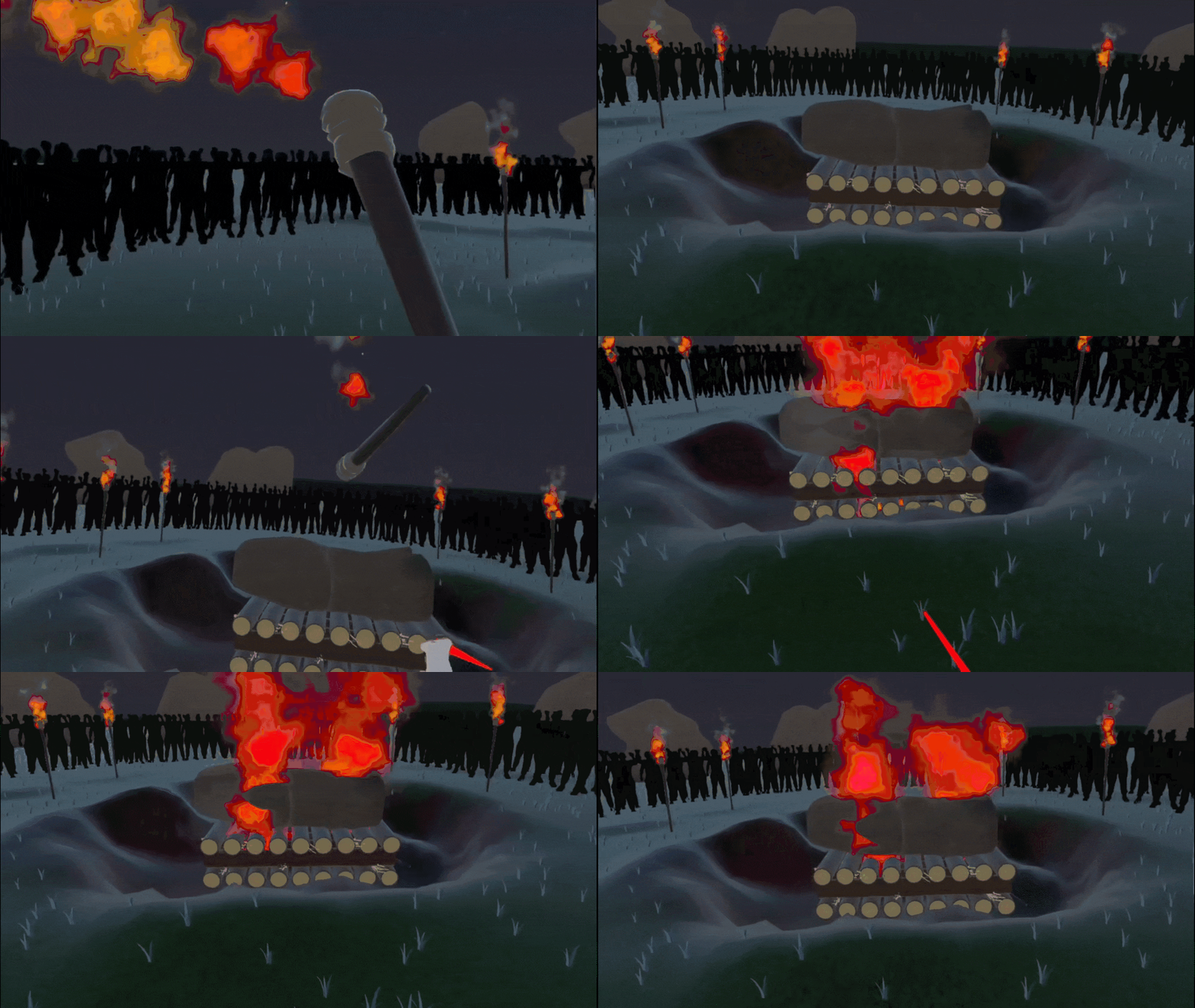
The two moments you visit are; the moment William Stuckley painted the Avebury landscape upon realising their importance, and, one of the times a group of locals decided to burn the stones for fear of them being cursed (I had to get something fantastical in there). In these scenes the interactions are; painting the landscape on a canvas resting on an easel next to you, and taking the torch and casting it into the pyre to start the fire beneath the prone stone. Both of these interactions provide a fun way for the user to interact with their environment in a realistic and tactile way, all without moving from the spot.


Walking App UX


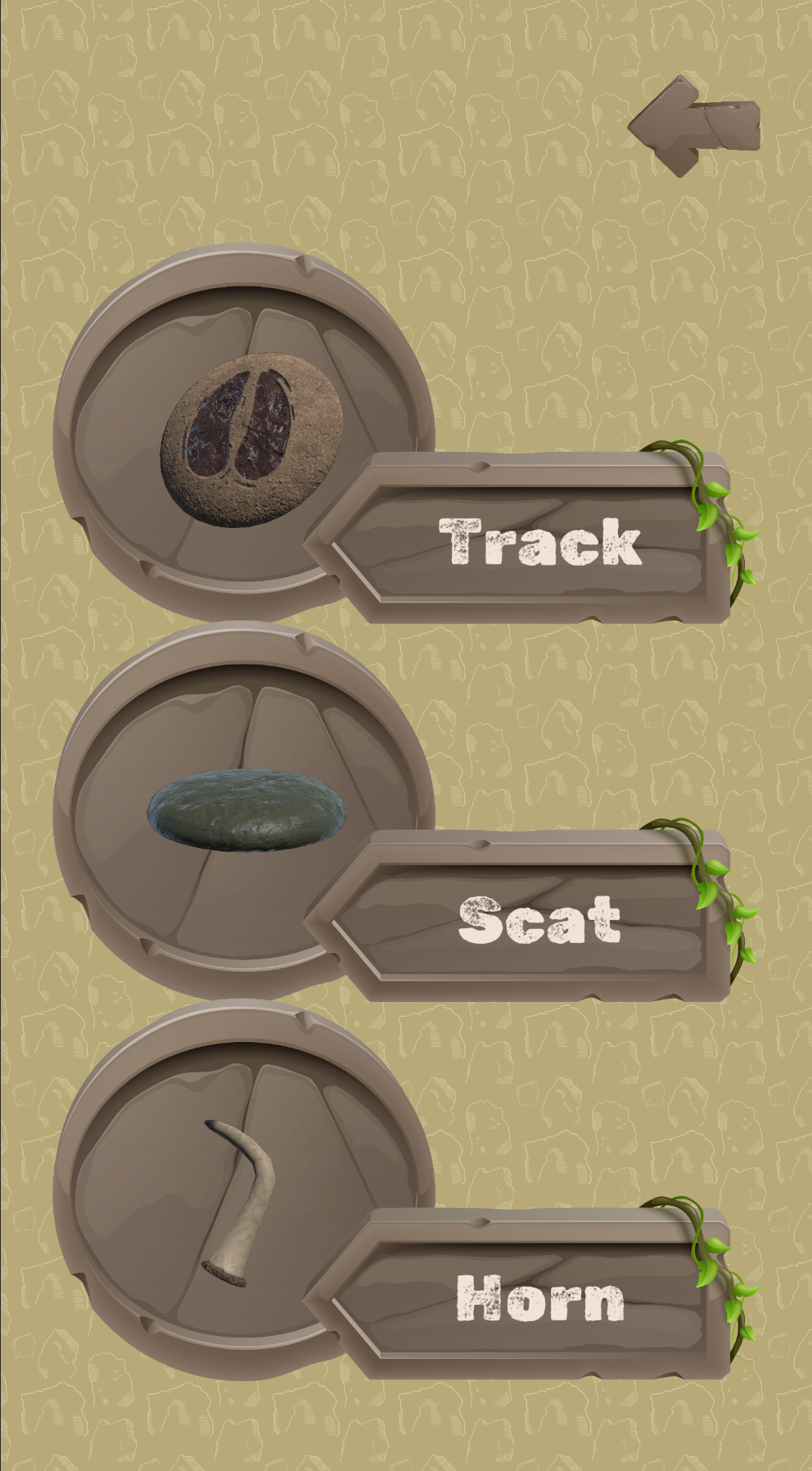
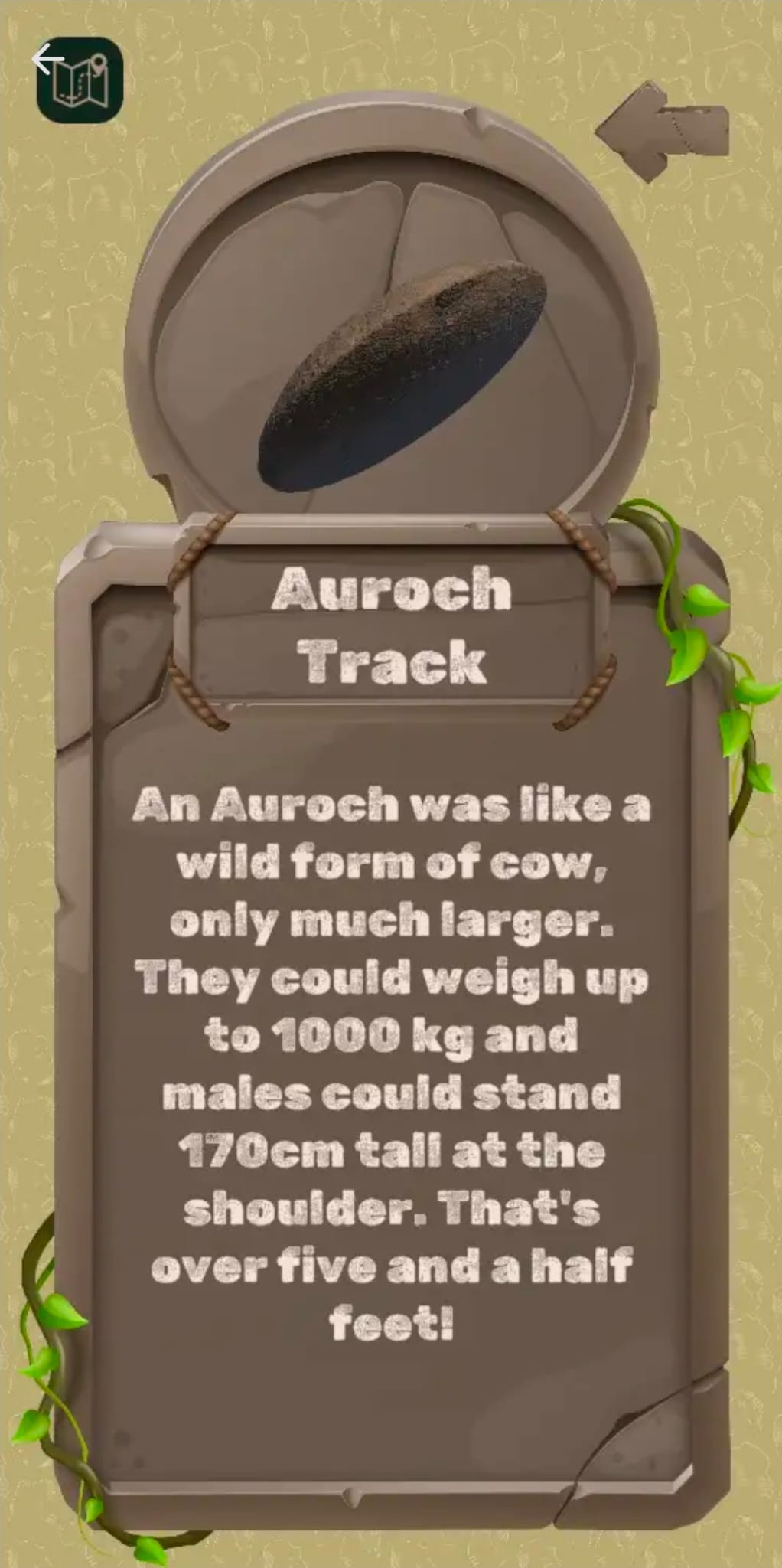
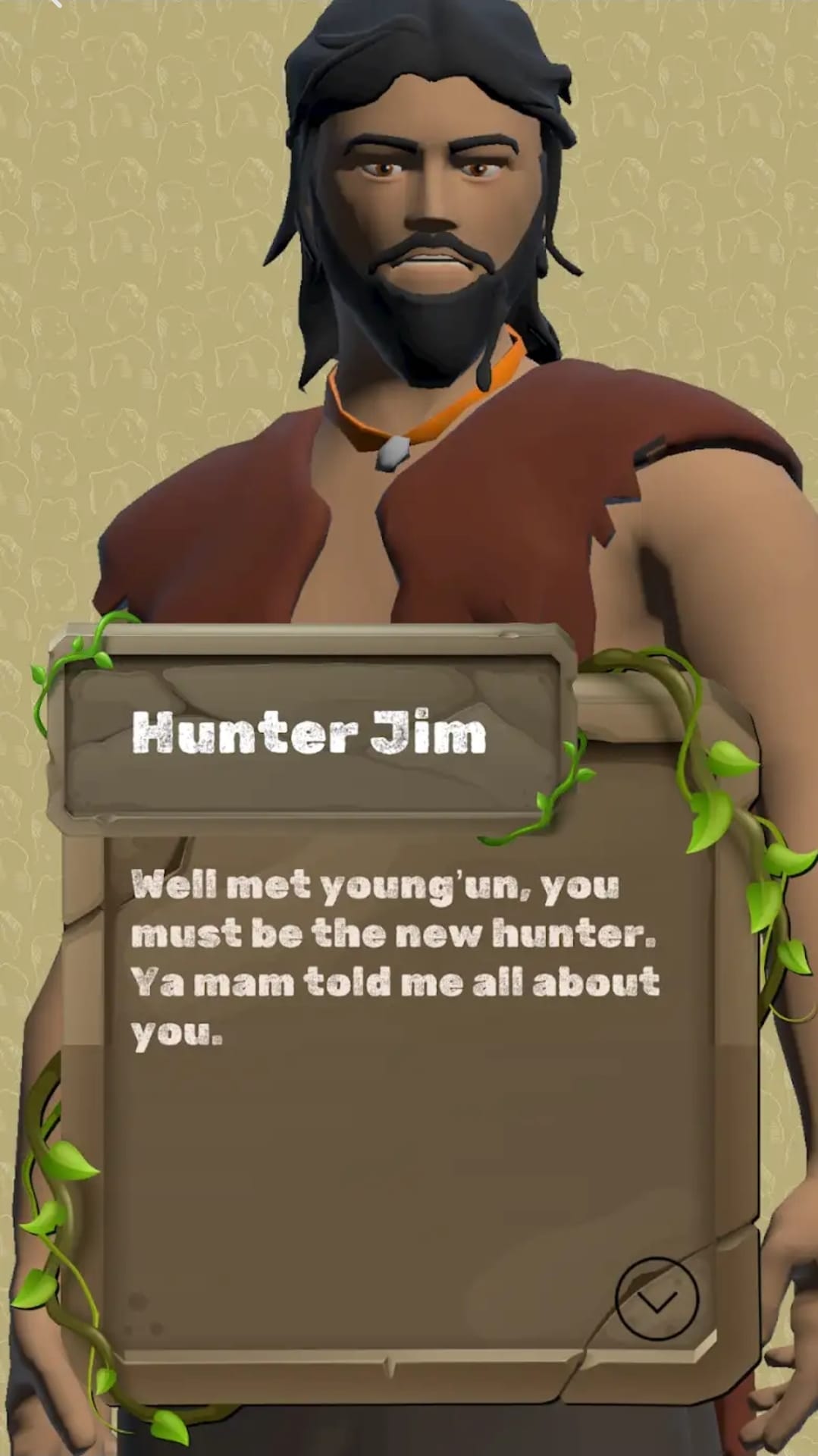
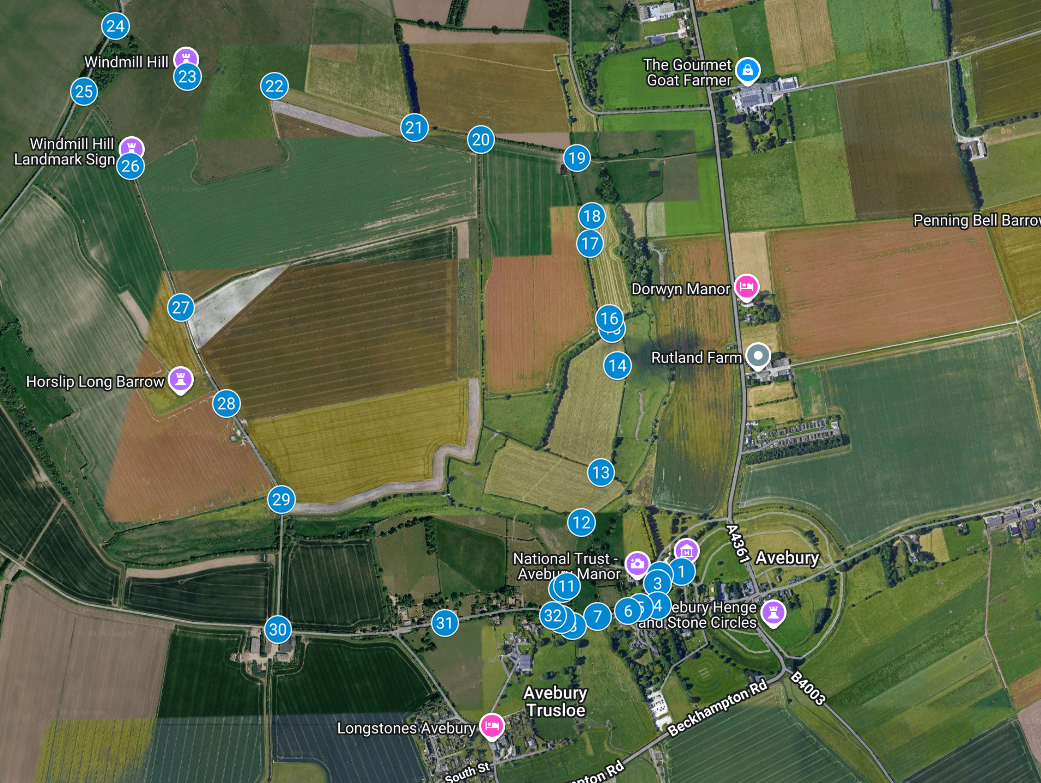
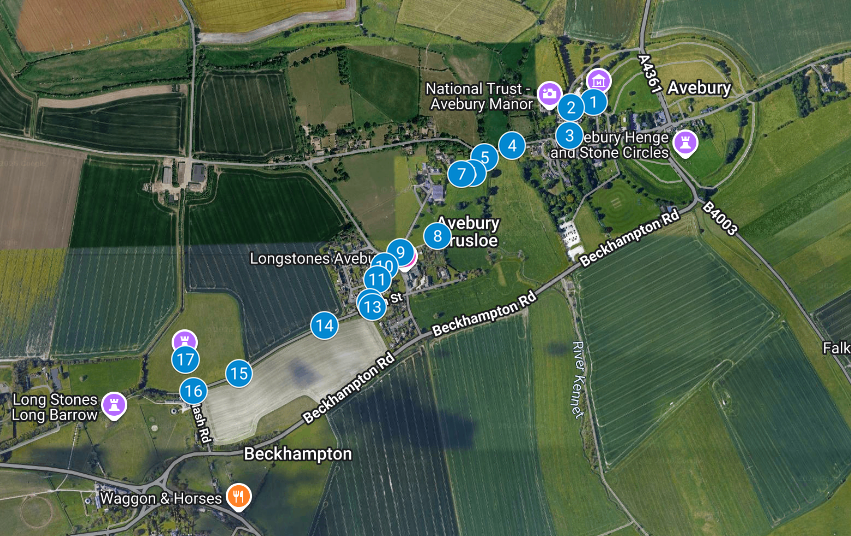
Henge Hunts is a neolithic hunting game where the user follows a hunter along an animal’s trail finding evidence of their presence along the way. This works by using GPS and locative narrative technologies to send players on short hikes around the greater Avebury area.
When testing I found that players were not walking with their phones out, opting instead to check them infrequently to check progress along a route or to confirm they were still on the right path. This was leading to them missing narrative beats and subsequently dulling the experience.
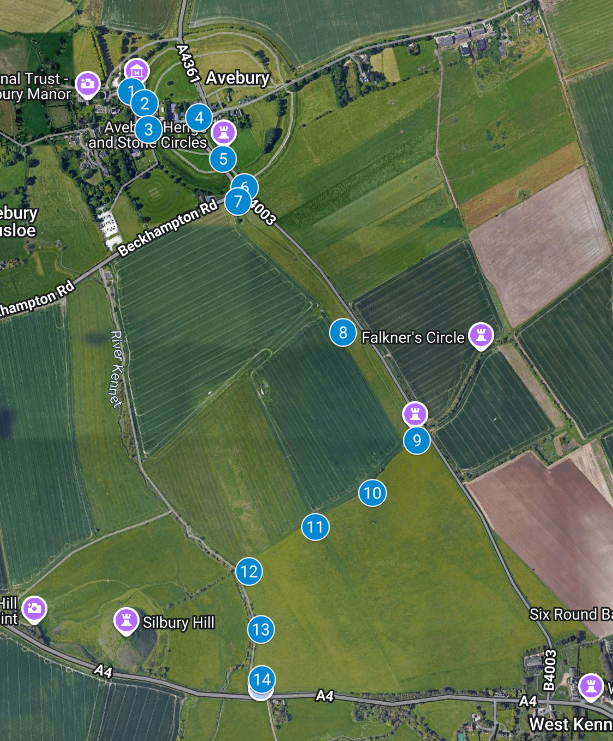
The solution I designed for this was twofold: I condensed the narrative beats into sections that can revolve around the sub destinations the players were heading for, and I strategically placed these locations to be at natural rest points.
Walking the routes myself many times, I noted down anywhere I passed that was either at the top of a climb where someone may need a moment to catch their breath, or an area with a dramatic vista where one may wish to pause and appreciate. Then I plotted those points along the route and chose the ones that neatly divided the route into three. This break in the walks allowed time for an active player in the group to open the game and complete the tasks and dialogue before being able to put their phone away again and continue walking.
This change meant that in further testing players finished their walks with a more complete understanding of the narrative and the factual information they were given.
One additional feature added was the ‘collection’. This stored the discovered information and narrative beats in its own section of the UI and, once found, players could revisit them at a later date. This resulted in players feeling less pressure to spend too long looking at their phone and gave them a way to reflect on their days walk once they had returned home.
I took on this contract at the same time as working full time and also trying to develop an indie title outside of work. In hindsight this was too much and I will admit that I overextended myself. Regardless of this I delivered two games that the National Trust were very happy with and both were delivered on time. They were showcased at an event at the site where the VR title was a standout hit (the children simply loved burning the stone) and the Site Curator and Archaeologist was particularly enamoured with the neolithic fauna element of Henge Hunts.
Reflecting on this contract I learned a lot. The business aspect of working alongside a client as large as the National Trust was big for me. The chain of command getting things signed off did cause me a few delays and the formality of submitting pitches meant my initial GDDs had to be concise, and parse-able by those not versed in game development. Of course the biggest challenge however was taking on a MR project that dealt with both AR and VR. This was completely new ground for me but my methodical approach to the design requirements of both ended up in what I would consider a decent experience.
Conclusions